FORD N1MP-3K183-AA Upper Intermediate Shaft 2020-2021-2023-2025 2.3L
fits model: Explorer, Aviator. make: Ford.
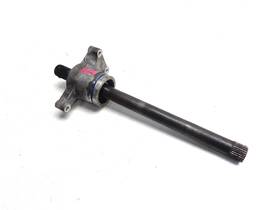
( Manufacturer Part Number: N1MP-3K183-AA ), ( Type: Driveshaft ), ( Manufacturer Warranty: 6 Months ), ( Items Included: Same As Photos ), ( Universal Fitment: No ), ( Country Of Origin: United States ), ( Placement On Vehicle: Upper ), ( Transmission Type: Automatic )
Review FORD 2020 202120232025 2.3l Upper Intermediate Shaft Oem fits EXPLORER AVIATOR
The **Ford N1MP-3K183-AA Upper Intermediate Shaft (UIS) for the 2020 2025 Ford Explorer Aviator with a 2.3L EcoBoost engine** is a critical component of the vehicle s drivetrain, serving as a vital link between the transmission and the differential. This high-performance shaft is engineered to withstand the demanding torque and rotational forces generated by the 2.3L EcoBoost engine, which delivers a robust 270 horsepower and 310 lb-ft of torque, ensuring seamless power delivery to the wheels. Crafted from precision-machined steel, the UIS is designed to maintain optimal alignment and structural integrity under the stresses of acceleration, braking, and cornering, contributing to the Explorer s smooth and responsive handling.
The **N1MP-3K183-AA** is specifically tailored to fit the **10-speed automatic transmission** found in the Explorer Aviator, offering compatibility with models spanning from the **2020 through 2025 model years**, including both **AWD and FWD configurations**. Its robust construction minimizes vibration and noise transmission, enhancing passenger comfort while maintaining durability over the long term. This shaft is also designed to accommodate the unique geometry of the Explorer s suspension system, ensuring proper articulation and flexibility as the vehicle navigates rough terrain or sharp turns.
For performance enthusiasts and mechanics alike, this component is a **direct replacement for the original equipment manufacturer (OEM) part**, guaranteeing a perfect fit without the need for modifications. Its **durable design** helps prevent premature wear on related drivetrain elements, such as the transmission and differential, while its **high-quality materials** ensure longevity even under aggressive driving conditions. Whether installed in a daily driver, a towing application, or a high-performance setup, the **N1MP-3K183-AA Upper Intermediate Shaft** delivers reliability and efficiency, reinforcing the Explorer Aviator s reputation for versatility and power.
### **Pros and Cons of Buying a Ford N1MP-3K183-AA (2020 2025 Explorer AVIATOR 2.3L EcoBoost with Upper Intermediate Shaft)**
#### **Overview**
The **Ford N1MP-3K183-AA** refers to a **2020 2025 Ford Explorer AVIATOR** equipped with a **2.3L EcoBoost V6 engine** paired with an **upper intermediate shaft (UIS) transmission** (likely a 10-speed automatic). This model is part of Ford s mid-size SUV lineup, targeting buyers seeking a balance between performance, comfort, and technology. Below is a detailed breakdown of its advantages and drawbacks.
---
### **Pros**
1. **Strong Engine Performance**
- The **2.3L EcoBoost V6** produces **270 300 hp** and **310 320 lb-ft of torque**, providing a good balance of power and efficiency.
- Turbocharging delivers quick acceleration, making it suitable for highway driving and towing (up to **5,000 lbs** with the proper package).
- Better fuel economy than older V8 models (around **20 22 MPG combined** in some trims).
2. **Modern Transmission (10-Speed Automatic)**
- The **upper intermediate shaft (UIS) transmission** is smoother and more responsive than older Ford transmissions, with better shift quality and reduced lag.
- Improved fuel efficiency and durability compared to older 6-speed or 8-speed automatics.
3. **Spacious and Comfortable Interior**
- The Explorer AVIATOR offers **three rows of seating**, making it practical for families or occasional passengers.
- **High-quality materials** (especially in higher trims like **STL or Limited**) with **heated/ventilated seats**, **power-adjustable driver s seat**, and **premium audio systems**.
- **Quiet cabin** with good sound insulation, contributing to a refined driving experience.
4. **Advanced Safety Features**
- Standard **Ford Co-Pilot360 ** safety suite, including:- **Pre-Collision Assist with Automatic Emergency Braking**
- **Blind-Spot Monitoring with Cross-Traffic Alert**
- **Lane-Keeping Assist & Adaptive Cruise Control**
- **360 Camera** (available in higher trims)
- **High-strength steel frame** and **multiple airbags** enhance crash protection.
5. **Tech and Connectivity**
- **SYNC 4 infotainment system** with **12.3-inch touchscreen**, **Apple CarPlay**, and **Android Auto**.
- **Wireless Apple CarPlay** (in some trims) and **Bluetooth connectivity**.
- **Available Ford BlueCruise** (hands-free highway driving on compatible roads).
- **Digital gauge cluster** (optional) for a modern dashboard look.
6. **Good Towing and Off-Road Capability**
- With the **Trail Boss** or **King Ranch** package, the Explorer can handle **light off-roading** (AWD, skid plates, off-road tuning).
- **Max towing capacity of 5,000 lbs** (with proper hitch and trailer brakes).
- **Available **Ford Off-Road Tuning** for better articulation and ground clearance.
7. **Reliability and Warranty**
- **Ford s 3-year/36,000-mile basic warranty** (extended to **5 years/60,000 miles** on the powertrain in some markets).
- The **2.3L EcoBoost** has proven to be **more reliable than older V8 engines**, with fewer reported issues.
- **Lower maintenance costs** compared to V8 models due to better fuel efficiency.
8. **Resale Value**
- The Explorer holds its value reasonably well, especially in **STL and Limited trims**, due to its strong reputation for comfort and tech.
9. **Available Luxury and Performance Options**
- **STL trim** offers a **sportier look** with **18-inch wheels**, **sport-tuned suspension**, and **performance exhaust**.
- **Limited trim** includes **premium leather, ambient lighting, and a panoramic sunroof**.
- **Hybrid option (2022 )** for better fuel economy (if considering future models).
---
### **Cons**
1. **Higher Cost of Ownership (Compared to Competitors)**
- **Fuel costs** are higher than a **Toyota Highlander Hybrid** or **Honda Pilot**, despite the EcoBoost s efficiency.
- **Maintenance expenses** (e.g., turbocharger, transmission fluid changes) can add up over time.
- **Tires and brakes** may wear faster due to the heavier weight (around **4,500 5,000 lbs** curb weight).
2. **Transmission Issues (Early Models)**
- Some **2020 2021 10-speed transmissions** reported **rough shifting or delayed engagement**, though Ford has improved reliability in later years.
- **Transmission fluid changes** are **critical** Ford recommends **every 60,000 miles** (skipping this can lead to premature failure).
3. **Ride Quality Not as Refined as Competitors**
- The Explorer s **suspension is firmer** than rivals like the **Chevy Traverse** or **Kia Telluride**, leading to a **less smooth ride on rough roads**.
- **Body roll** is noticeable at higher speeds, especially in **STL trim**.
4. **Interior Build Quality Variability**
- **Lower trims (XLT, XLT Premium)** use **cheaper plastics** that feel less premium.
- **Plastic panels** can show wear over time, and some customers report **loose or rattling components**.
5. **Cargo Space Limitations**
- **Third-row seating reduces cargo space significantly** (only **10.6 cu. ft.** behind the third row).
- **Roof rails are not standard**, limiting towing options without purchasing them separately.
6. **Resale Depreciation**
- While not as bad as some luxury SUVs, the Explorer **loses value faster** than **Toyota Highlander** or **Honda Pilot** over time.
7. **Infotainment System Glitches**
- **SYNC 4 can be slow or unresponsive**, especially with multiple Apple CarPlay/Android Auto connections.
- **Software updates** are sometimes delayed, leading to outdated features.
8. **Towing Limitations**
- While **5,000 lbs is decent**, it s **less than competitors like the Chevrolet Tahoe (8,400 lbs)** or **Ford Expedition (9,300 lbs)**.
- **Proper towing setup (gooseneck, weight distribution hitch) is required** for heavy loads.
9. **Noise Levels in Higher Speeds**
- Some drivers report **wind noise and road noise** becoming noticeable at **70 mph**, though this varies by trim.
10. **Recall and Software Updates**
- Like many modern vehicles, the Explorer has had **recalls for software glitches** (e.g., **SYNC issues, blind-spot monitor malfunctions**).
- **Ford s recall response has been inconsistent** in some cases, requiring owner vigilance.
---
### **Conclusion**
The **2020 2025 Ford Explorer AVIATOR (N1MP-3K183-AA) with the 2.3L EcoBoost and UIS transmission** is a **solid mid-size SUV** that excels in **comfort, technology, and towing capability**. It offers a **good balance of power and efficiency**, making it a **practical choice for families, adventurers, and tech-savvy buyers**.
However, **potential buyers should consider**:- **Transmission reliability** (ensure proper maintenance).
- **Higher long-term costs** (fuel, maintenance, depreciation).
- **Ride comfort trade-offs** (firmer suspension than competitors).
- **Interior quality variations** (higher trims feel more premium).
**If you prioritize:****Space, tech, and towing** **Explorer is a great choice.**
**Best fuel efficiency** **Consider a hybrid or non-turbo V6.**
**Smoothest ride** **Look at a Toyota Highlander or Honda Pilot.**
**If you want a more premium experience without sacrificing too much practicality, the Explorer remains a strong option especially in the **STL or Limited trims.****
---
### **Final Recommendation**
**Buy the Ford Explorer AVIATOR (2020 2025) if:**- You need a **three-row SUV with good towing (up to 5,000 lbs)**.
- You want **modern tech (SYNC 4, Apple CarPlay, safety features)**.
- You prefer **Ford s V6 EcoBoost power** over a hybrid or diesel.
- You re okay with **higher maintenance costs** in exchange for **comfort and space**.
**Avoid if:**- You **prioritize fuel efficiency** over power (consider a **Hyundai Palisade Hybrid** or **Toyota Highlander Hybrid**).
- You **hate
Details:
All parts have been physically inspected to be in good condition and working for used parts.
part #: n1mp3k183 prices
- $129.95-$249.00
specifications universajoin:
- for models: Explorer, Aviator
- for makes: Ford
- mpn: N1mp-3k183-aa
- type: Driveshaft
- manufacturer warranty: 6 Months
- items included: Same As Photos
- universal fitment: No
- country of origin: United States
- placement on vehicle: Upper
- transmission type: Automatic
offer universajoin:
- sold: 0
- options: Ship-to-home
- quantity: 1
- started: April 6, 2026
- availability: In Stock
shipping universajoin:
- service: Economy
- cost: $29.95
- class: Economy
- transit: 3-7 Days
- type: Fixed
seller universajoin:
- city: Pontiac, Michigan
- # reviews: 7843
- rating: 99.7%
returns universajoin:
- paid by: Buyer
- policy: Returns Accepted
- time: 30 Days
general universajoin:
- Transmission Drivetrain > Driveshafts Parts > Additional Driveshaft Parts
- condition: Used
payments universajoin:
- wallet: Paypal
- credit card: Diners-club
- other
Ford N1MP-3K183 Is Similar To:
- -w709296-s426 Motorcraft Ford Genuine Oem Super Duty Steering Gear Pitman Arm (15.7% similar) Higher shipping and handling cost prevail. All photography is for illustrative purposes only and persons depicted are model's. Free shipping: if an item is offered with shipping - for lower 48 USA only...(August 14th, 2018)
- 0298-44fc0-fa 029844fc0fa Ford Mustang Gt Rwd Rear Drive Shaft Driveshaft Propeller Oem (27% similar) Expedited shipping available, directly for details. Products sold in quantities will show a single image representing the others equal or greater condition...(July 18th, 2018)
- 108315397 2006 Ford Expedition Front Drive Shaft 141k Oem 00441 (30.3% similar) No photos of the actual item are available...(October 9th, 2015)
- 108634411 2004-2011 Ford Ranger Rear Drive Shaft 87k Oem 05674 (33.1% similar) No photos of the actual item are available...(February 4th, 2016)
- Front 109304 Ind Fits Drive Ford Shaft Reman Usa 00-05 Excursion (17% similar) ...(April 15th, 2015)
- F150 04 05 Shaft Drive Front Ford Style 1229875 (19.1% similar) ...(April 4th, 2015)
- 14350542 Aftermarket Products New Driveshaft Rear Ford Explorer Taurus Mercury Sable (27.7% similar) The items are brand new parts that look and fit same as original, except at a much better price...(January 5th, 2019)
- 05 02 10 11 98 01 03 04 Ranger 99 1518199 Front Shaft 07 08 06 Ford 00 Drive 09 (22.6% similar) Warranty is for replacement of the part only and does not include any towing, labor, fluids, seals or gaskets. Sport track boxes. Example left is drivers side. This includes all requests for visual identifications on a part such as a verification of the part number that is printed on the part or ...(April 23rd, 2015)
- 183608 Tribute 01 02 03 04 05 06 07 Ford Escape Rear Drive Shaft At (26.9% similar) ...(November 22nd, 2015)
- 1997-1998 Ford Expedition Drive Shaft (30.2% similar) Residential address - load is curbside delivery only someone over 18 must be present for. Some listings include a warranty and others do not. Daytime phone number is required load will not deliver until appointment scheduled. They will not have any packaging included...(December 22nd, 2017)
- F-150 1ftfx1ef2bfd39920 2011 Ford Front Drive Shaft 112k 430-446 (24.8% similar) This is a proven used front drive shaft. It must also match the engine size, gear ratio or trim level described in fitment below. This front drive shaft has been inspected for breaks or cracks. Make 100 sure it fits before purchase...(March 19th, 2016)
