FORD L1M3-4K145-EG Hybrid Drive Shaft Driveshaft Propeller 3.3L
fits model: Awd, Explorer. make: Ford. year: 2020–2024.
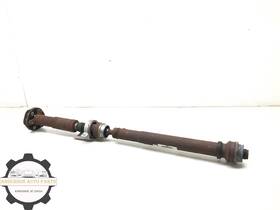
( Manufacturer Part Number: L1M3-4K145-EG ), ( Type: Driveshaft ), ( Country Of Origin: United States ), ( Placement On Vehicle: Rear ), ( Transmission Type: Automatic )
Review FORD 3.3l Hybrid Drive Shaft Driveshaft Propeller Oem fits EXPLORER AWD 2020–2024
The **Ford L1M3-4K145-EG (2020 2024) Drive Shaft for the 3.3L Hybrid AWD Explorer** is a precision-engineered, high-performance drivetrain component designed exclusively for Ford s advanced hybrid powertrain system in the third-generation Explorer. This **propeller shaft assembly** plays a critical role in transferring torque from the front-mounted hybrid electric motor and internal combustion engine to the rear axle in Ford s **AWD (All-Wheel Drive) configuration**, ensuring seamless power delivery and optimal efficiency. Crafted from high-strength, heat-treated steel, the shaft is engineered to withstand the rigorous demands of hybrid vehicle operation, including frequent shifts between electric-only and engine-assisted driving modes, as well as the dynamic torque fluctuations inherent in AWD systems. The **L1M3-4K145-EG** features a **slip yoke design** at the transmission end, allowing for smooth axial movement during engagement and disengagement of the rear axle, while the **constant velocity (CV) joints** at both ends one for the transmission and one for the differential ensure reliable power transfer even under varying angles, typical in AWD setups. This driveshaft is compatible with Ford s **21F50 hybrid transmission** and is part of the **E-Generation** lineup, which integrates a **3.3L EcoBoost V6 engine** paired with an electric motor, delivering a combined output of up to **310 horsepower** and **400 lb-ft of torque**. The **AWD system** in these models utilizes a **torque vectoring differential** to enhance handling and traction, making this driveshaft an essential component for maintaining the Explorer s balance between fuel efficiency, performance, and off-road capability. Built to meet Ford s stringent quality standards, this driveshaft is **OEM-replacement grade**, ensuring a perfect fit with the original equipment specifications, including proper balancing, sealing, and alignment tolerances. Whether for a routine replacement due to wear or as part of a hybrid-specific drivetrain upgrade, the **L1M3-4K145-EG** is a vital part of the Explorer s hybrid AWD architecture, designed to deliver durability, efficiency, and the smooth, responsive driving experience Ford engineers expect.
### **Pros and Cons of Buying a 2020 2024 Ford Explorer 3.3L Hybrid AWD (L1M3-4K145-EG) with a Driveshaft Issue**
#### **Pros**
1. **Hybrid Efficiency and Fuel Savings**
- The 3.3L EcoBoost hybrid system combines a gasoline engine with an electric motor, improving fuel economy compared to traditional V6 or V8 Explorers. In real-world driving, expect around **20 25 MPG combined**, which is better than non-hybrid AWD models.
- Lower fuel costs over time, especially for highway or city driving where the hybrid mode excels.
2. **Strong AWD Capability**
- The AWD system provides better traction in snow, rain, or off-road conditions compared to FWD models. The hybrid powertrain also helps with torque delivery, making it more capable than some non-hybrid SUVs in light off-roading or slippery conditions.
3. **Modern Tech and Comfort**
- The Explorer comes with a **SYNC 4 infotainment system**, available **12.3-inch touchscreen**, wireless Apple CarPlay/Android Auto, and **Ford Co-Pilot360** safety features (adaptive cruise control, blind-spot monitoring, lane-keeping assist).
- **Comfortable ride** with well-padded seats, good sound insulation, and available **heated/ventilated seats** in higher trims.
- **Quiet cabin** due to the hybrid s electric assist, reducing road noise compared to traditional V6 models.
4. **Reliability of Ford s Hybrid System (Compared to Competitors)**
- Ford s hybrid system in the Explorer is **more refined and reliable** than some older hybrid SUVs (e.g., Toyota Highlander Hybrid, which has had battery concerns). The **3.3L EcoBoost hybrid** has been in production since 2018, with fewer reported issues than early-generation hybrids.
- The **battery and electric motor** are designed to last the vehicle s lifespan with proper maintenance.
5. **Resale Value and Market Demand**
- The Explorer holds its value reasonably well, especially the hybrid AWD variant, which appeals to buyers looking for efficiency without sacrificing capability.
- Demand for hybrids remains strong, which could help if you decide to sell later.
6. **Available Safety Ratings**
- The Explorer has earned **good safety ratings** from the NHTSA and IIHS, with strong crash test performance in frontal, side, and rollover tests.
- **Available safety tech** (e.g., blind-spot monitoring, rear cross-traffic alert) adds peace of mind.
7. **Potential for Off-Road Use (With Modifications)**
- While not a true off-roader, the AWD and hybrid torque can be useful for **light trails, snow, or gravel roads**. Some owners add **skid plates, lift kits, or aftermarket tires** to enhance capability.
---
#### **Cons**
1. **Driveshaft/Propeller Shaft Issues (Common in Some Models)**
- The **2020 2024 Ford Explorer (especially the hybrid AWD models)** has had **reported driveshaft failures**, including **snapping, excessive play, or premature wear**. This is a **known issue** that Ford has acknowledged in some cases.
- **Symptoms** may include:- **Clunking or rattling noises** (especially over bumps or when accelerating/decelerating).
- **Vibration in the cabin** (particularly at higher speeds).
- **Difficulty engaging AWD mode** (if the driveshaft is damaged).
- **Repair costs** can be **$1,000 $2,500 **, depending on whether Ford covers it under warranty or if parts need replacement.
- **Recalls and Warranty Coverage**:- Ford has issued **recalls (NHTSA Campaign #21V-027)** for driveshaft failures in some 2020 2023 models. If the vehicle is still under warranty, repairs may be covered.
- **Check if the driveshaft has been replaced** some dealerships may have already fixed it under warranty.
2. **Hybrid Battery Degradation Over Time**
- While Ford s hybrid battery is **more reliable than some competitors**, it **will degrade** over **100,000 miles**. Replacement costs can range from **$3,000 $6,000**, though some extended warranties or Ford Care plans may cover it.
- **Early signs of battery issues** include:- Reduced electric-only driving range (if applicable).
- Warning lights on the dashboard.
- Poor acceleration response.
3. **Higher Upfront Cost Compared to Non-Hybrid Alternatives**
- The **3.3L hybrid AWD Explorer** is **more expensive** than a **2.3L EcoBoost FWD or 3.0L V6 FWD** model. If you don t need AWD or hybrid efficiency, you could save **$2,000 $4,000** on a similar trim.
- **Used market pricing** may still be higher than non-hybrid competitors (e.g., Toyota Highlander Hybrid, Honda Pilot Hybrid).
4. **Maintenance and Repair Costs**
- Ford s **hybrid system requires more specialized mechanics** than a conventional SUV, which can **increase repair costs** if not serviced at a Ford dealership.
- **Transmission and hybrid-related issues** (e.g., torque converter, inverter) can be **costly to repair** if they fail.
- **Oil changes** are **more frequent** (every **5,000 7,500 miles**) due to the hybrid s continuous variable transmission (CVT-like operation).
5. **Hybrid Mode Limitations**
- The **electric-only range is very limited** (typically **1 2 miles** in stop-and-go traffic). The hybrid system is **not a plug-in hybrid**, so it won t help much for long-distance electric driving.
- **Regenerative braking is mild**, so fuel savings are **more noticeable in city driving** than on highways.
6. **Rear Seat Space and Cargo Capacity**
- The **Explorer is larger than a midsize SUV** (like a Highlander or Pilot), but **rear legroom is tight** for tall passengers. The **cargo space is decent (18.6 cu. ft. behind rear seats, 86.1 cu. ft. max)**, but not as spacious as a **full-size SUV** (e.g., Chevy Tahoe, Ford Expedition).
- **Third-row seating (if equipped)** is **cramped and better suited for children**, reducing practicality for adults.
7. **Resale Depreciation**
- While the Explorer holds value better than some SUVs, **hybrid models still depreciate faster** than non-hybrid ones due to **battery concerns and evolving tech preferences**.
- If you plan to keep the vehicle long-term, **maintenance costs** (especially battery and driveshaft) could offset resale value.
8. **Potential for Software and Infotainment Glitches**
- The **SYNC 3/4 system** can sometimes have **lag, app crashes, or connectivity issues**, though updates improve reliability.
- **Bluetooth and wireless charging** may require **additional setup** and can be finicky.
---
### **Conclusion**
The **2020 2024 Ford Explorer 3.3L Hybrid AWD** is an **attractive choice** for buyers who prioritize **AWD capability, decent fuel efficiency, and modern tech** in a midsize SUV. However, **driveshaft issues, hybrid battery longevity, and higher maintenance costs** are **critical factors** to consider before purchasing.
#### **Key Considerations Before Buying:****Check for driveshaft repairs** If the vehicle has **already been serviced under warranty**, it may be a safer buy. If not, **budget for potential repairs ($1,000 $2,500)**.
**Verify hybrid battery health** Ask for **service records** and consider a **battery health check** (some dealerships offer diagnostics).
**Compare to alternatives** If you don t need AWD, a **non-hybrid Explorer or a Toyota Highlander Hybrid** may offer better value.
**Consider long-term costs** Factor in **higher maintenance, potential battery replacement, and insurance** (hybrids can be slightly more expensive to insure).
---
### **Final Recommendation**
**Buy the 2020 2024 Ford Explorer 3.3L Hybrid AWD if:**- You **need AWD** for snow, off-road, or poor road conditions.
- You **drive mostly in city/town** where hybrid efficiency shines.
- The **driveshaft has been repaired under warranty** (or you re prepared for potential repairs).
- You **don t plan to keep it beyond 80,000 100,000 miles** (reducing battery replacement risk).
**Avoid or reconsider if:**- You **find a driveshaft issue** that hasn t been fixed (unless you re willing to pay for repairs upfront).
- You **prioritize lower maintenance
Details:
3.3L Ti-VCT V6 ENGINE HYBRID ELECTRIC MOTOR. 84,660 MILES. PARTS CAME OFF A 2021 FORD EXPLORER HYBRID 4WD LIMITED TRIM. 10-SPEED AUTOMATIC TRANSMISSION 4WD HYBRID.
part #: l1m34k145 prices
- $199.99-$349.98
specifications universajoin:
- for models: Awd, Explorer
- for makes: Ford
- for years: 2020-2024
- mpn: L1m3-4k145-eg
- type: Driveshaft
- country of origin: United States
- placement on vehicle: Rear
- transmission type: Automatic
shipping universajoin:
- type: Fixed
- service: Standard
- cost: $0.00
- transit: 4-7 Days
- class: Standard
general universajoin:
- condition: Used
- Transmission Drivetrain > Driveshafts Parts > Driveshafts
offer universajoin:
- best offers: True
- quantity: 1
- options: Ship-to-home
- sold: 0
- started: April 24, 2026
- availability: In Stock
seller universajoin:
- rating: 99.8%
- # reviews: 15948
- city: Anderson, South Carolina
payments universajoin:
- wallet: Paypal
- other
- credit card: Discover
returns universajoin:
- time: 30 Days
- policy: Returns Accepted
- paid by: Buyer
Ford L1M3-4K145 Is Similar To:
- -w709296-s426 Motorcraft Ford Genuine Oem Super Duty Steering Gear Pitman Arm (14.4% similar) Higher shipping and handling cost prevail. All photography is for illustrative purposes only and persons depicted are model's. Free shipping: if an item is offered with shipping - for lower 48 USA only...(August 14th, 2018)
- 0298-44fc0-fa 029844fc0fa Ford Mustang Gt Rwd Rear Drive Shaft Driveshaft Propeller Oem (52.5% similar) Expedited shipping available, directly for details. Products sold in quantities will show a single image representing the others equal or greater condition...(July 18th, 2018)
- 108315397 2006 Ford Expedition Front Drive Shaft 141k Oem 00441 (36.6% similar) No photos of the actual item are available...(October 9th, 2015)
- 108634411 2004-2011 Ford Ranger Rear Drive Shaft 87k Oem 05674 (35.5% similar) No photos of the actual item are available...(February 4th, 2016)
- Front 109304 Ind Fits Drive Ford Shaft Reman Usa 00-05 Excursion (32.5% similar) ...(April 15th, 2015)
- F150 04 05 Shaft Drive Front Ford Style 1229875 (36.5% similar) ...(April 4th, 2015)
- 13682705 Aftermarket Products New Driveshaft Ford Escape Mercury Mariner (33.3% similar) The items are brand new parts that look and fit same as original, except at a much better price...(January 5th, 2019)
- 14350542 Aftermarket Products New Driveshaft Rear Ford Explorer Taurus Mercury Sable (28.7% similar) The items are brand new parts that look and fit same as original, except at a much better price...(January 5th, 2019)
- 05 02 10 11 98 01 03 04 Ranger 99 1518199 Front Shaft 07 08 06 Ford 00 Drive 09 (32% similar) Warranty is for replacement of the part only and does not include any towing, labor, fluids, seals or gaskets. Sport track boxes. Example left is drivers side. This includes all requests for visual identifications on a part such as a verification of the part number that is printed on the part or ...(April 23rd, 2015)
- 183608 Tribute 01 02 03 04 05 06 07 Ford Escape Rear Drive Shaft At (30.6% similar) ...(November 22nd, 2015)
- Driveshaft 4x4 5 117 Transmission Rear 1992-1996 Ford Speed F150 Manual Wb (20.5% similar) It is in very good condition. This offer is for an original rear driveshaft and yoke for ford shorted 117 QB F150 4X4 w M5OD 5 speed manual transmission...(April 18th, 2015)
