TOYOTA 986-130 Rear Drive Shaft 4.7
fits model: 4wd, Tundra. make: Toyota. year: 2000–2006.
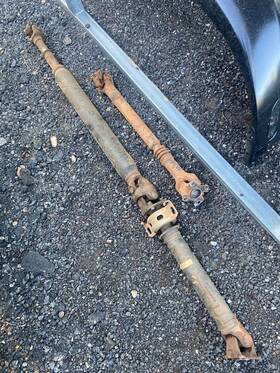
( Manufacturer Part Number: 986-130 ), ( Type: Driveshaft ), ( Item Diameter: 3.5 In ), ( Universal Fitment: No ), ( Placement On Vehicle: Rear ), ( Transmission Type: Automatic )
Review TOYOTA Oem 4.7 Rear Drive Shaft Used fits TUNDRA 4WD 2000–2006
The **986-130 2000-2006 Toyota Tundra 4WD 4.7L Rear Drive Shaft** is a robust, high-performance drivetrain component designed exclusively for Toyota s iconic full-size pickup trucks during the first generation of the Tundra s production run. This rear drive shaft is engineered to deliver seamless power transfer from the transmission to the rear axle in 4-wheel-drive configurations, ensuring optimal traction, stability, and off-road capability for drivers demanding both rugged utility and dependable performance. Crafted from high-strength steel, the drive shaft features a precision-balanced design to minimize vibration and wear, even under heavy loads or challenging terrain, making it ideal for towing, hauling, or navigating rough off-road conditions. The assembly includes a durable universal joint at the transmission end, allowing for smooth articulation as the suspension moves, while the constant-velocity (CV) or tripod-style joint at the axle end ensures consistent power delivery without slippage. This drive shaft is a direct-fit replacement for the stock unit found in the 4.7L V8-equipped Tundra models, compatible with both the 5-speed automatic and 4-speed automatic transmissions, and is built to withstand the demands of daily driving, extreme temperatures, and prolonged use without compromising structural integrity. Whether restoring a classic Tundra to factory specifications or upgrading an existing setup for enhanced durability, this drive shaft represents a critical component for maintaining the truck s legendary reliability and off-road prowess.
### Pros and Cons of Buying a 1998-2006 Toyota Tundra (4WD, 4.7L, Rear Drive Shaft)
#### **Pros:**1. **Reliability and Durability** The 4.7L V8 engine and 4WD system are known for their robustness, especially in the Tundra s early generations. Toyota s reputation for longevity in trucks holds true for this model, particularly if well-maintained.
2. **Strong Towing and Hauling Capacity** The 4.7L engine (with proper cooling and maintenance) can tow up to **8,000 10,000 lbs** with the right setup, making it suitable for heavy-duty tasks. The rear-wheel-drive configuration (with optional 4WD) provides good traction for off-road and towing applications.
3. **Proven Transmission Options** The 4-speed automatic (A341E) and 5-speed manual transmissions are durable, though the automatic can be finicky if not serviced properly. The 4WD system (with a transfer case) is simple and reliable compared to modern complex systems.
4. **Availability of Parts** Being an older model, parts (engines, transmissions, axles, and body panels) are widely available and often affordable. Toyota s legacy parts market ensures easy replacements.
5. **Lower Purchase Price** Compared to newer trucks, these models are significantly cheaper, making them a budget-friendly option for those needing a workhorse without modern luxury features.
6. **Off-Road Capability** With proper modifications (lift kits, locking differentials, skid plates), the Tundra can handle light off-roading. The rear-drive shaft setup allows for better weight distribution in some off-road scenarios.
7. **Simplicity in Design** Fewer electronic failures compared to modern trucks. The mechanical nature of the drivetrain means fewer issues with computer glitches or complex diagnostics.
---
#### **Cons:**1. **Engine and Cooling Issues** The 4.7L V8 is prone to **head gasket failures** (especially in later years) and **coolant leaks** from the thermostat housing or water pump. Regular coolant changes and monitoring are critical.
2. **Transmission Problems** The 4-speed automatic (A341E) can develop **slippage, rough shifting, or complete failure** if not maintained. The 5-speed manual is more reliable but less comfortable for long hauls.
3. **Rust and Body Corrosion** Many early Tundras (especially those driven in snowy or salted regions) suffer from **frame rust and floor pan corrosion**. A thorough inspection of the undercarriage is essential.
4. **Poor Fuel Economy** The 4.7L V8 is thirsty, averaging **12 15 MPG combined**, making it expensive to operate compared to modern diesel or hybrid trucks.
5. **Outdated Safety Features** Lack of modern safety tech (no stability control, basic airbags, poor crash test ratings). Modern trucks have **electronic stability control, side-impact airbags, and better braking systems**.
6. **Comfort and Ride Quality** The suspension is stiff, and the cabin lacks modern noise insulation, making for a **noisy and uncomfortable ride** on highways.
7. **Electrical and Modernization Challenges** Adding modern features (GPS, backup cameras, keyless entry) can be difficult due to outdated wiring and lack of compatibility with aftermarket systems.
8. **Emissions and Smog Compliance** Some states have stricter emissions laws, and older trucks may fail smog checks, limiting their usability in certain areas.
9. **Resale Value** Unlike newer trucks, these models depreciate quickly and hold little value, making them a poor long-term investment.
10. **Limited Modern Tech and Convenience** No Bluetooth, minimal infotainment, poor visibility in some trims, and basic interior materials compared to today s standards.
---
### **Conclusion and Recommendation**
The **1998 2006 Toyota Tundra (4WD, 4.7L, rear-drive shaft)** is a **strong choice for those needing a reliable, heavy-duty work truck on a budget**, provided it is **well-maintained and inspected thoroughly**. It excels in **towing, off-roading (with mods), and durability** but suffers from **aging mechanical issues, poor fuel efficiency, and outdated safety features**.
#### **Best For:**- **Budget-conscious buyers** who need a truck for **heavy towing, hauling, or off-roading** without spending much upfront.
- **DIY mechanics** who can handle **coolant system maintenance, transmission checks, and rust repairs**.
- **Those in rural or off-grid areas** where modern conveniences are less critical.
#### **Not Ideal For:**- **Daily drivers** who prioritize comfort, fuel efficiency, or modern safety features.
- **Buyers who want low maintenance** this truck requires **regular upkeep** to avoid costly failures.
- **Those in states with strict emissions laws** where smog checks may be problematic.
- **People who plan to keep the truck long-term** resale value is poor compared to newer models.
#### **Final Recommendation:** **Buy only if:**You **inspect the engine (head gaskets, cooling system), transmission, and undercarriage for rust** thoroughly.
You **verify maintenance records** (oil changes, coolant flushes, timing belt if applicable).
You **budget for potential repairs** (coolant leaks, transmission issues, suspension wear).
You **plan to modify it for off-roading or heavy towing** rather than use it as a daily driver.
**Avoid if:**You **need a truck for daily commuting or highway driving** modern trucks are far more comfortable.
You **cannot afford unexpected repairs** this truck is not a "set it and forget it" purchase.
You **want modern safety and tech features** this model lacks them entirely.
**Alternative Considerations:**- If you need **better fuel efficiency**, look at a **used diesel Ram 1500 (2011 ) or Ford F-150 (2015 EcoBoost)**.
- If you want **modern reliability**, consider a **Toyota Tundra (2015 ) or Ford F-150 (2020 )**.
- If you **must have a 4.7L V8**, a **2007 Tundra (with the 5.7L V8 in later years) or a used 4Runner** may be more refined.
**Bottom Line:** The **1998 2006 Tundra is a great work truck for the right buyer** someone who **values raw capability over comfort and is prepared for maintenance**. For everyone else, a newer model offers **better reliability, safety, and efficiency**.
Details:
This drive shaft is not universal fitment and suitable only for automatic transmission vehicles. Perfect for those looking a genuine OEM replacement part their Toyota Tundra, ensuring quality and compatibility with the specified vehicle model. It has a diameter of 3.5 inches and is manufactured with the part number 986-130. The product is a used OEM rear drive shaft specifically designed for 2000 2006 Toyota Tundra 4WD with 4.7 engine.
part #: 986130 price
- $439.99
specifications universajoin:
- for models: 4wd, Tundra
- for makes: Toyota
- for years: 2000-2006
- mpn: 986-130
- type: Driveshaft
- item diameter: 3.5 In
- universal fitment: No
- placement on vehicle: Rear
- transmission type: Automatic
payments universajoin:
- wallet: Apple-pay
- other
- credit card: Visa
returns universajoin:
- policy: No Returns
shipping universajoin:
- class: Expedited
- cost: $65.63
- transit: 11-18 Days
- type: Calculated
- service: USPS Priority Mail
- carrier: USPS
general universajoin:
- Transmission Drivetrain > Driveshafts Parts > Driveshafts
- condition: Used
offer universajoin:
- quantity: 1
- options: Ship-to-home
- sold: 0
- availability: In Stock
- started: April 9, 2026
- best offers: True
seller universajoin:
- city: Jewell, Georgia
- rating: 100.0%
- # reviews: 10
Toyota 986-130 Is Similar To:
- 00000-00000 Toyota Truck Tacoma Drive Shaft Line Bolts Nuts Washers Set (48.5% similar) Will fit both 4X4 and two wheel drive trucks. These bolts will fit all 1984 and newer truck 4RUNNERS using same. Toyota truck 4RUNNER T100 Tacoma drive shaft bolts in good shape. Some remote or far off locations can take an extra day two. If an oversight slips by, please let me know. If you ...(April 18th, 2018)
- 04371-0c094 Toyota Oem 2011 2017 Tundra (34.6% similar) Toyota tundra and sequoia oem u-joint...(January 4th, 2017)
- 04371-30010 04371-30011 Matsuba New Joints Driveshaft Prop Shaft Toyota Runner Pick Up (29.1% similar) B w photos are the actual part. New from a vintage inventory, in the mats package, part number, UJ-210. These are sealed in plastic and photo 2 shows the grease nipple...(January 15th, 2019)
- 04371-60210 Toyota Brand New Oem Lexus Spider Kit Universal Joint (36.9% similar) Item must be in the original condition and has undamaged packaging...(February 8th, 2019)
- Axle-universal Toyota 0437104030 Oem Joints 05-06 Rear Tundra (30.2% similar) ...(April 11th, 2015)
- Oem Tundra 043710c010 Joints Axle-universal 00-04 Toyota Rear (28.6% similar) This part position is rear center...(May 28th, 2015)
- Tundra 043710c082 07-15 Joints Oem Axle-universal Toyota Rear (27% similar) ...(May 31st, 2015)
- Joints 0437136030 Oem Rear Toyota Axle-universal (31.9% similar) Superseded part numbers this item may have been superseded from a different part number from this manufacture...(April 17th, 2015)
- 0437160051 Toyota Oem-front Universal Joints (31.2% similar) All parts are sold on an individual basis per part number. Please through messaging. This parts position is front forward, rearward...(November 24th, 2017)
- Toyota Joints Rear 0437160060 Axle-universal Oem (33.6% similar) A genuine toyota part must be in its original packaging to be a genuine toyota part...(April 24th, 2015)
- 04373-12010 Toyota Oem Celica Propeller Shaft Boot Kit (40.3% similar) Parts are in stock and ready to be shipped. What you see in the offer is will receive. Please message me with any specific request for toyota oem parts. Message me with questions before buying. Oem toyota original part. Boot kit, universal for a Celia GT4 ST205 3S-GTE. This is the kit to repair ...(July 11th, 2018)
